
The Cairngorms raptor project is dedicated to seeing healthy and productive populations of raptors restored within the Cairngorms National Park. It focusses work on the four species (golden eagle, peregrine falcon, hen harrier and merlin) listed as priority species in the National Park Partnership Plan.
The project takes a partnership approach and through engagement with land managers and experts in the field, works to monitor populations, build understanding of the issues facing raptors and eliminate wildlife crime.
Survey work
Core to the project is good data and evidence. Over time we have been working to build a comprehensive picture of current raptor populations in the National Park, drawing on existing information and filling in gaps with survey and monitoring or modelling. Raptor data will also be used in the Cairngorms Nature Index to tell us about the health and function of our ecosystems, enabling us to target our conservation work, measure progress against national trends, and evaluate success.
The Cairngorms peregrine survey 2024 showed a concerning decline in numbers since 2002. This decline is likely a result of a combination of land management practices, decreased prey availability, wildlife crime and, more recently, outbreaks of avian flu. We are exploring a range of options to address this decline, including GPS tagging to gather data on bird movements and survival. The full report can be found online here.
In 2026, the Park Authority has carried out a survey of breeding merlin to estimate the number of breeding pairs within the Cairngorms National Park, and to provide additional coverage for the national merlin survey. In addition, we’re working to establish how much potential habitat there is for golden eagles and hen harriers in the National Park, allowing us to estimate the potential size of the population the Park could support.
Tagging
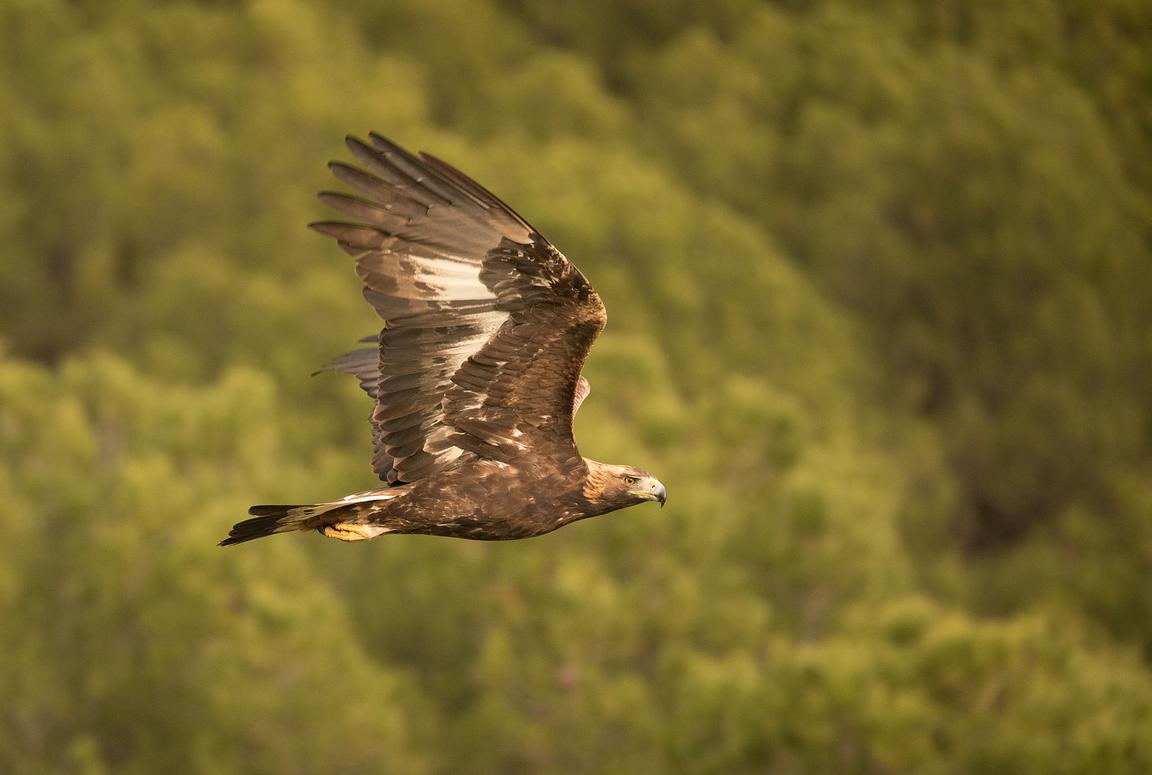
Working with the North East Scotland Raptor Study Group, we fitted three golden eagle chicks with satellite tags in 2025 and a further eight chicks with GPS tags in 2026. The tags give valuable insights into the behaviour, movements, and habitat usage of juvenile eagles in the changing landscape of the Cairngorms. The data from the tags are shared with the national dataset, building understanding of this species and contributing to a comprehensive picture of golden eagles in Scotland. Next year we will work with partners to fit a further four eagles in the National Park with GPS tags.
The Park Authority is progressing tagging of other priority raptor species and has funded the purchase of satellite tags to be used by the RSPB. These are being fitted to hen harriers within the National Park over the next two breeding seasons, tracking individual birds’ movements to further inform scientific understanding of the ecology of the species. We are also supporting a trial of peregrine tagging through the purchase of GPS tags to be used by Lothian and Borders Raptor Study Group and Tayside and Fife Raptor Study Group.
Tackling wildlife crime
Unacceptably, raptor persecution is still happening in and around the National Park. The Park Authority actively supports the detection of crimes against birds of prey in the National Park through data sharing, and works with the Raptor Persecution Tactical Delivery Group, led by Police Scotland to eliminate wildlife crime.
By Isla Graham, Raptor Conservation Officer at the Cairngorms National Park Authority